
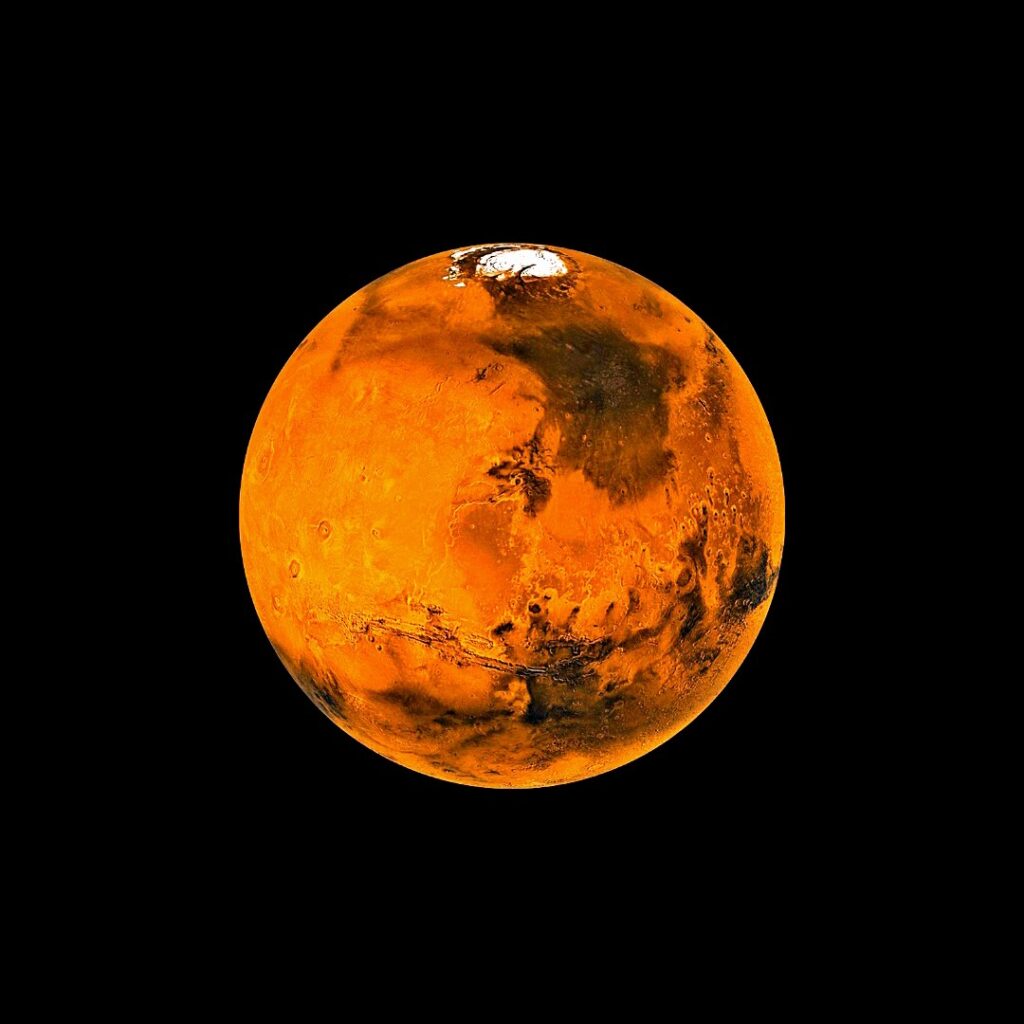
Mars is having its busiest decade since the Viking landers. Orbiters map it, rovers crawl it, a helicopter has flown on it, and samples of its rock sit in sealed tubes awaiting a ride home. Behind the robots stands the larger question that organises billion-dollar programmes on three continents: when, and how, do humans follow — and what must be proven before they do?
The sample return saga
The Perseverance rover has spent years collecting and sealing tubes of Martian rock and soil, chosen to answer whether Mars once hosted life. Bringing them to Earth — where laboratories can analyse them with instruments no spacecraft can carry — is the field’s top priority and its most complex choreography: lander, ascent vehicle, orbital rendezvous and a return cruise, split across agencies and budgets that keep being renegotiated. The science case survives every redesign; the engineering remains formidable.
For more coverage of the stories shaping the day, visit our homepage and the latest reporting in Blog.
Learning to live off the land
Human missions cannot pack everything. Experiments on Mars have already produced oxygen from the atmosphere; future plans target water from buried ice for drinking, radiation shielding and even rocket propellant — making fuel on Mars for the trip home transforms the arithmetic of the whole endeavour. Each demonstration is small; the doctrine they prove, called in-situ resource utilisation, is the difference between visiting Mars and operating there.
The radiation and health problem
Beyond Earth’s magnetic shield, crews face cosmic radiation and solar storms for years at a time, alongside the toll of weightlessness on bone, muscle and eyes. No engineering fix fully solves this; mission designs trade shielding mass, travel speed and acceptable risk. Honest programme managers describe crew health, not propulsion, as the pacing item for human Mars missions — the reason the Moon is being used as a rehearsal space first.
Further reading: NASA Mars exploration programme.
New players, new architectures
Commercial heavy-lift rockets have scrambled every plan drawn before them: vastly more mass to Mars per launch, at potentially far lower cost, changes what missions can attempt — more cargo landed in advance, larger habitats, redundant everything. Agencies are adapting architectures around commercial vehicles even as those vehicles complete their own test campaigns. The result is a rare moment when the limiting factor is shifting from lift capacity to everything else.
What the robots do meanwhile
Whatever the human timeline, the robotic programme compounds in value: mapping ice deposits, characterising dust and weather, testing entry and landing at scale, and scouting sites. Each rover generation also refines the life question — organics found, ancient lakebeds mapped, methane mysteries carried forward. When crews eventually land, they will arrive at the best-studied alien landscape in history, prepared by machines that went first.
Mars milestones in progress
- Sealed rock samples await a return journey to Earth.
- Oxygen has already been produced from Martian air.
- Buried ice mapping guides future landing site choices.
- Crew health, not propulsion, paces human mission timelines.
Why this matters now
Mars exploration has become the organising project of the space age’s second act: the goal that justifies the rockets, the robots and the budgets across rival nations and companies alike. Its value is not only the destination. The capabilities being built to reach it — life support that recycles nearly everything, autonomous systems that operate minutes from help, power and medicine for isolated crews — are precisely the capabilities a durable human presence anywhere beyond Earth requires, and several of them feed back into life on this planet.
Mars will not be hurried, but it is being systematically approached: sample by sample, demonstration by demonstration. The robots are not a substitute for the human story — they are its first chapters, written in advance.