
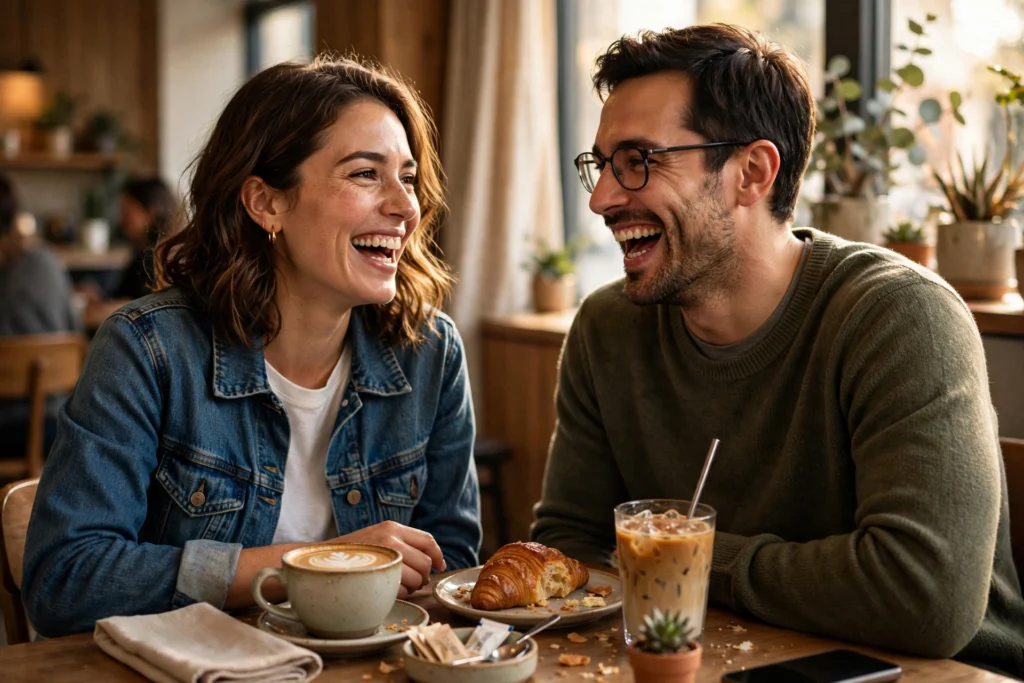
It was supposed to be effortless. Dating apps promised an endless stream of potential partners, each one a swipe away. Yet a decade into the experiment, a striking number of singles report the same feeling: exhaustion. They are tired of scripted opening lines, conversations that evaporate, and the sense of being perpetually evaluated — and perpetually evaluating. The response, increasingly, is to log off and go back to meeting people in the physical world.
Surveys of app users in several countries have found large majorities describing themselves as burned out by online dating, with younger users — the generation that grew up on the apps — often the most disillusioned of all. Research organisations such as the Pew Research Center have documented the ambivalence for years: many users credit apps with successful relationships while simultaneously finding the experience emotionally draining.
The psychology behind the fatigue
Psychologists point to choice overload. When the next profile is always one swipe away, it becomes harder to invest in the person in front of you; every conversation competes with an imagined better option. The result is a paradox of modern dating — more access to potential partners, less willingness to give any single one time to become interesting.
There is also the matter of how it feels. Being reduced to a handful of photos invites constant comparison, and the gamified design of the platforms — matches as rewards, streaks, boosts — delivers small dopamine hits that keep people scrolling without necessarily moving them closer to a relationship. As writers at Psychology Today frequently note, the apps are optimised for engagement, and engagement is not the same thing as success at finding a partner.
The in-person revival
Into this fatigue has stepped a thriving offline scene. Run clubs have become the cliché success story — part fitness, part flirting — but the menu is far wider: singles hiking groups, board-game nights, cooking classes, pottery workshops, volunteer projects and speed-dating events that now sell out in many cities. The common thread is shared activity. Talking to someone while doing something removes the interview feeling of a coffee date and lets personality show up sideways.
Friends and family are back in the matchmaking business too. Introductions carry a built-in layer of trust that no algorithm can replicate: someone who knows you has already done the first round of filtering. Many daters say even an unsuccessful set-up feels better than a ghosted chat, because the interaction was real.
A balanced way back in
None of this means the apps are finished — they remain how a large share of couples meet, and for people in small towns or with niche circumstances they can be a lifeline. The emerging wisdom is about dosage. Use one app, not five. Set a time limit. Move to a real conversation quickly. Treat a match as the start of curiosity, not a verdict.
What singles say they actually want
Talk to people leaving the apps and a pattern emerges: they do not necessarily want more options — they want better information. A profile can tell you someone’s height, job and taste in holidays; it cannot tell you whether they are kind to waiters, funny under pressure or easy to be quiet with. Those are the things relationships are actually built on, and they only reveal themselves in person, over time.
There is also a growing preference for smaller ponds. Niche communities — a climbing gym, a language class, a neighbourhood running group — offer repeated, low-pressure contact with the same people, which friendship research has long identified as the real engine of attraction. Familiarity breeds liking, and liking, given a spark, becomes something more. It is slower than swiping. Daters increasingly seem to think that is the point.
The deeper shift is cultural. After years of optimising romance like a search engine, singles are rediscovering an older truth: attraction is contextual, chemistry needs presence, and people are more than their profiles. The first date of 2026 is increasingly likely to happen on a hiking trail or across a board game — and many would say that is progress. For more on modern relationships, visit Searching For Singles.
Pingback: Leighton Meester's New Netflix Holiday Romance Is Perfect Viewing for Singles - Searching For Singles